


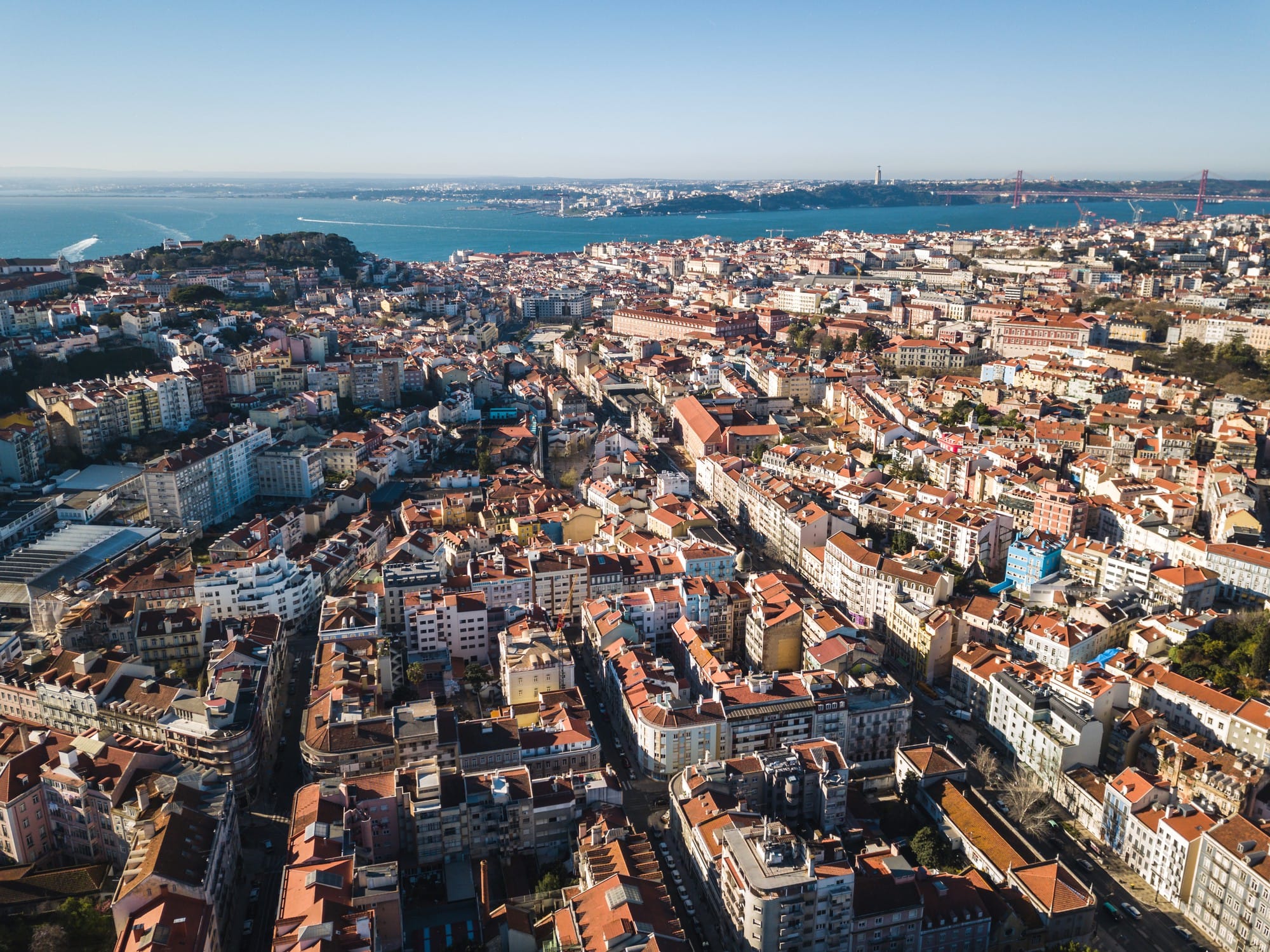
Those who decide to move to the Lisbon region are quickly faced with a question that seems simple but is not: Lisbon, Cascais, Sintra or Oeiras? Within walking distance of each other — often a 20 or 30-minute drive away — these four areas offer quite different life experiences and architectural styles, shaped by different geographies and histories along the so-called Portuguese Riviera.
This choice is not just about location on the map. It’s about the type of house you’ll find, the light and climate you’ll have at home every day, and the pace of life that suits you. In this article we compare the four areas from the point of view of those who will live and decorate the house, not just those who visit.
Cascais: cosmopolitan coastline and reinvented summer homes
Cascais has built its identity as a summer destination for the Portuguese aristocracy since the late nineteenth century, when the royal family took up residence there. This heritage left an architecture of villas and mansions of noble trait, today coexisting with contemporary buildings next to the marina and beaches. It is a cosmopolitan area, with a strong presence of international community, restaurants, international schools and an outdoor life associated with the sea.
Typical properties range from modern apartments with sea views to historic villas to rehabilitate. In either case, the proximity to the Atlantic brings with it saline humidity, very intense light and the need for materials resistant to the sea air — factors that must be thought of in the interior design phase.
- Apartments with sea views and classic villas next to the bay and Estoril predominate.
- Direct sunlight and the sea breeze call for fabrics, paints and hardware resistant to humidity and salt.
- It is an area much sought after by expatriate families and those who work remotely or hybridly.
Sintra: mountains, romanticism and green microclimate
Sintra has a completely different identity from the neighboring coastal strip. Protected by the Sintra Mountains, the region developed a cooler and wetter microclimate, with dense vegetation that inspired the romantic palaces of the nineteenth century, such as Pena and Monserrate — a set so unique that the historic center is a UNESCO World Heritage Site.
Living in Sintra attracts especially those looking for tranquility, contact with nature and a more rural environment without straying too far from Lisbon. The houses vary between old farms, mountain villas and properties with generous gardens, often requiring extra attention to the ambient humidity, thermal insulation and solar orientation of the main rooms.
- The microclimate of the mountains is cooler and wetter than the rest of Greater Lisbon, even though it is close to the coast.
- Farms, villas and houses with gardens predominate over the urban apartment.
- It attracts families and retirees who value nature, silence and space, keeping Lisbon within walking distance.
Oeiras: residential, business and planned life
Between Lisbon and Cascais, Oeiras has developed as a more residential and organized area, with a strong business component — it is there that several technology parks and the headquarters of international companies are concentrated. The coastal strip of the municipality today corresponds to the Union of Parishes of Oeiras and São Julião da Barra, Paço de Arcos and Caxias, which brings together areas such as Paço de Arcos and Caxias to an interior with more recent and planned residential neighborhoods. It is worth noting that Carcavelos, despite being neighboring, belongs to the municipality of Cascais and not to Oeiras.
Oeiras also stands out for being, according to the GfK/NIQ Purchasing Power Europe 2025 study, the municipality with the highest per capita purchasing power in Portugal, with an average disposable income of around 26,863 euros per inhabitant — the highest value among all municipalities in the country. This economic strength helps to explain the demand for high-end housing and the pace of new construction that is seen in the municipality.
It is a frequent choice for families with school-age children and for professionals who work in the area but prefer a calmer pace than in Lisbon. The architecture tends to be more contemporary, with gated communities and newly built apartments, which facilitates more flexible interior designs, without the typical limitations of old buildings.
- Strong residential and business vocation, with a good offer of international schools.
- Predominance of more recent construction, which gives greater freedom to the interior design.
- Typical profile: families and professionals looking for a balance between work, school and quality of life.
Lisbon city: between historic neighborhoods and new developments
Within the city of Lisbon itself there is a second decision to make: historic district or new area? Neighborhoods such as Alfama, Chiado, Príncipe Real or Campo de Ourique offer old buildings, often with tiles, high ceilings and narrow street layouts, ideal for those looking for character and neighborhood life within walking distance of everything.
Newer areas, such as Parque das Nações or some riverside areas, offer contemporary buildings, better energy efficiency and easier parking, but with less historical identity. The choice between rehabilitating an old apartment or buying a new property has a direct impact on the type of interior architecture project required — the former usually requires more technical and structural adaptation work.
There is also a third way, for those looking for expanding areas that promise some price margin compared to the historic center or Cascais — the most cited example is Marvila, in the eastern part of the city. In recent years the area has become a hub of galleries, studios and cultural spaces, such as the Fábrica do Braço de Prata, which has attracted investment and made prices rise very quickly: INE data show that Marvila has gone from being the cheapest parish in Lisbon to one of the most expensive, with the median price exceeding 6,000 euros per square meter. It is therefore worth having realistic expectations — it is no longer the bargain it was a decade ago — and taking into account that it still coexists with a two-speed area, with new developments next to social housing and degraded housing, and that the rental market remains poorly consolidated, with rents not keeping up with the same rise in sales. It’s a good example of how a zone can change quickly, and why it’s worth evaluating every street and every block carefully, rather than relying solely on the reputation of an emerging neighborhood.
- Historic neighbourhoods offer architectural character but require more careful technical adaptation works.
- New areas of the city offer more immediate comfort and energy efficiency.
- The choice of neighbourhood must take into account daily routine, mobility and the type of rehabilitation that is willing to be done.
Whichever area of Greater Lisbon you choose, CW Arquitetura accompanies the entire process, from the architectural project to the final decoration, including the purchase and coordination of furniture and the management of the work. CW can also help you choose your home in Portugal, whether for your move, a holiday home or even an investment. We go to the property and identify the one that best suits your needs.
Our work, however, is not limited to Greater Lisbon: we work on projects across the country, from the North to the Algarve, with the same close monitoring at each stage. Learn more about what we do at CW Arquitetura.
Talk to CW Arquitetura and tell us which of these areas you are considering — we help you turn that choice into the right home for you. Talk to CW Arquitetura.