


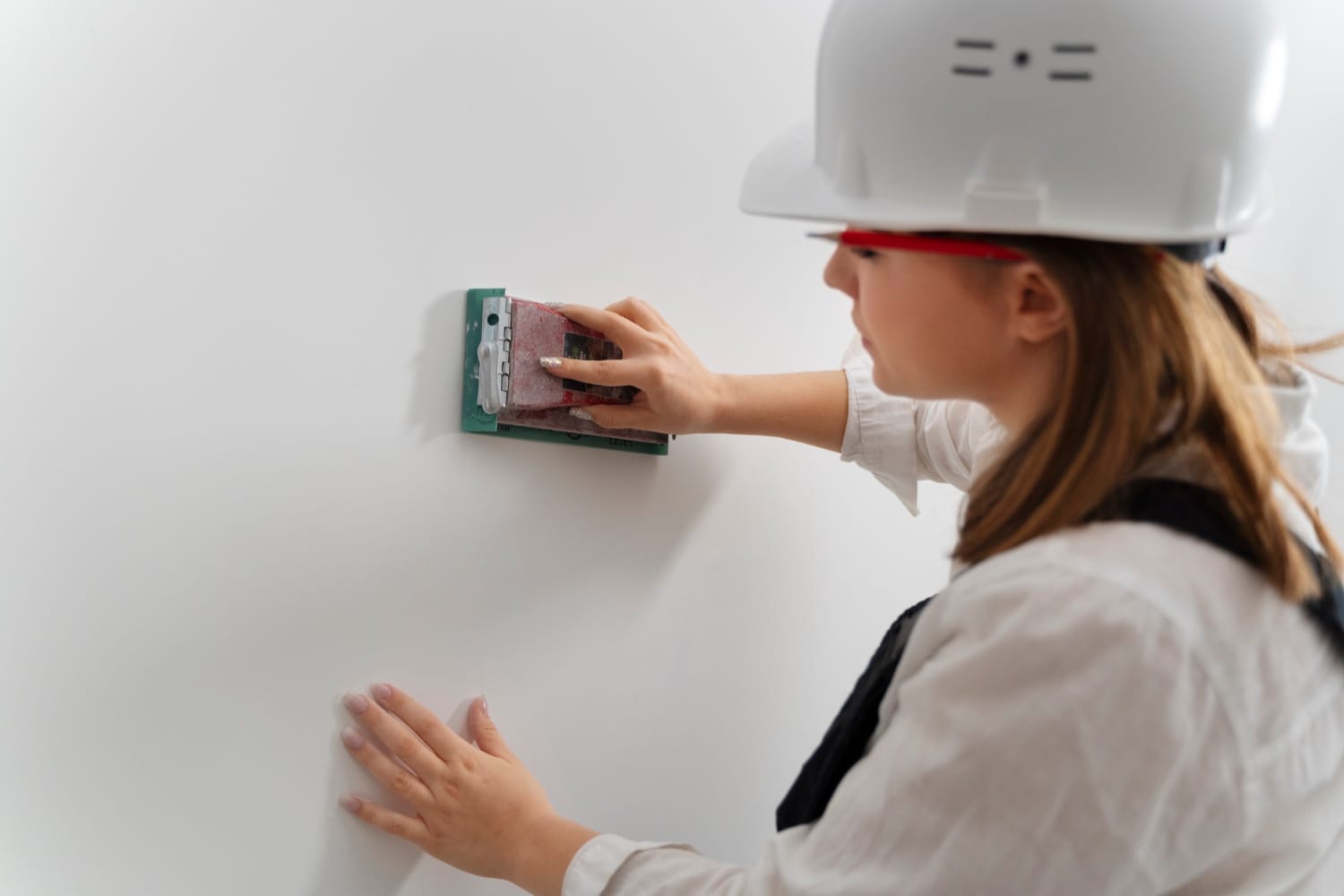
Painting is a fundamental element in the construction and decoration of environments, responsible for giving life and personality to the space. However, the choice of the type of paint and the execution of the finish are essential steps for the success of the project — and it is precisely here that the sanding process becomes decisive.
Sanding the wall levels the surface, removes imperfections and ensures optimal adhesion of the paint, resulting in a uniform and professional finish. This step is especially important on walls with irregularities, corrected cracks or that have undergone recent repairs with spackle, also helping to remove dust and dirt that could compromise the fixation of the final paint.
How to Choose the Right Sandpaper for Every Surface
The choice of the right sandpaper varies directly depending on the roughness, the current state of the surface and the preparation stage:
| Type of sandpaper | Weight | Indication for Use |
|---|---|---|
| Coarse Sandpaper | Between 80 and 120 | Very uneven surfaces, rough plaster or with excess of old paint. |
| Fine Sandpaper | Between 180 and 240 | Surfaces that are already smooth or with spackle, ideal for the final smooth finish. |
In a professionally coordinated remodeling, these technical details — which include the correct sanding, the choice of the appropriate primer and the exact number of coats — are entirely managed by the team responsible for the work. This allows the customer to enjoy the transformation of the space without the need to monitor each operational step closely.
The CW Arquitetura team takes care of all phases of your turnkey project, ensuring that surface preparation and paint finishes reach the highest standard of quality and durability.
Frequently Asked Questions (FAQ)
Can I paint without sanding the wall first?
Although it is physically possible to apply paint to surfaces that are already perfectly smooth and clean, in the vast majority of cases the lack of sanding results in an uneven finish, with visible imperfection marks and less durability of the paint.
What type of sandpaper should I use on a wall with spackle?
For walls prepared with spackle, it is recommended to use fine sandpaper (usually 180 to 220 grit). This ensures that the layer of putty is not damaged or removed in excess, providing an extremely soft touch and ready to receive the primer and paint.
Is it necessary to sand the wall between coats of paint?
In general, it is not necessary to sand the wall between coats of the same paint if the drying interval is adhered to. However, very light sanding with ultrafine sandpaper may be recommended if you notice small suspended dust that has stuck to the wet paint, or when transitioning between different types of products.