


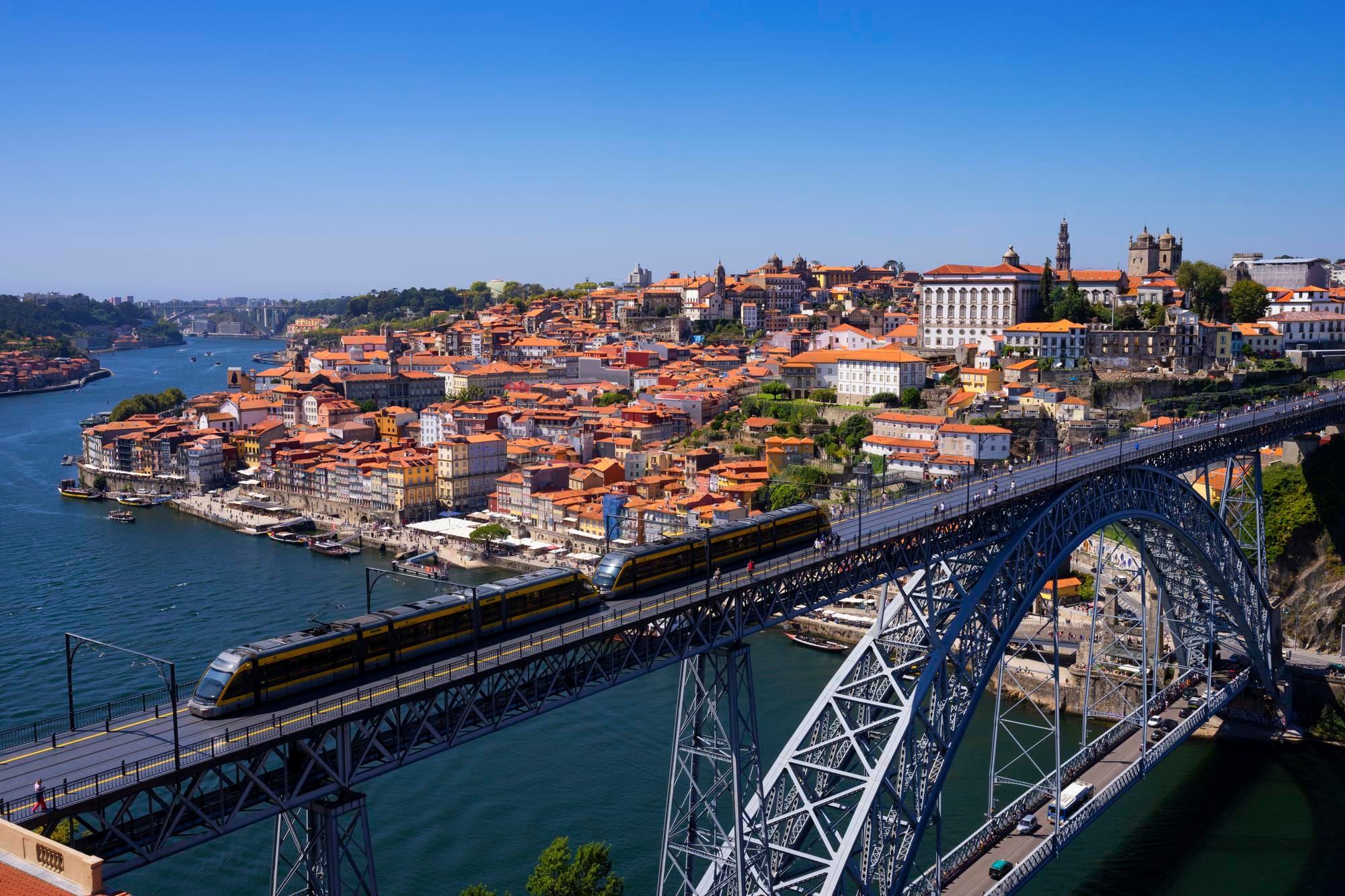
Porto has its own architectural identity within Portugal: a city of granite, tiles and sloping streets over the Douro River, which in the last two decades has experienced one of the most intense urban rehabilitation processes in the country. For those considering moving to the region, understanding this duality between historical heritage and contemporary renovation is essential before choosing a house and thinking about the interior design.
The Porto Metropolitan Area goes far beyond the historic downtown: it includes areas such as Matosinhos, Vila Nova de Gaia and Foz do Douro, each with its own character, as well as a rainier and wetter Atlantic climate than the rest of the country, a factor that any architectural project in this region needs to take seriously.
The heritage of granite and tiles
Traditional Porto architecture is based on two very striking materials: granite, used structurally in facades, staircases and stonework, and façade tiles, which gained great expression from the nineteenth century onwards, often brought or financed by ‘Brazilians’ — Portuguese who became rich in Brazil and returned to build houses in Porto. These tiled facades have become one of the most recognizable visual symbols of the city.
Rehabilitating an old building in Porto usually implies conserving or restoring these elements, which requires specific technical know-how — from the treatment of the original tile to the consolidation of granite and wood structures, construction systems that behave differently from more recent concrete buildings.
- Structural granite and façade tiles are the most characteristic elements of traditional Porto architecture.
- Many tiled facades date from the nineteenth century and are now protected as heritage.
- The rehabilitation of these buildings requires specific conservation techniques, different from new construction.
Matosinhos, Vila Nova de Gaia and Foz: three ways of living by the river and the sea
Matosinhos combines fishing tradition with one of the most sought-after urban beach areas in the country, as well as a growing business park — it mainly attracts families and professionals who want to live near the sea without leaving the metropolitan area. Vila Nova de Gaia, on the other side of the Douro, is known for its Port wine cellars and hillside residential neighborhoods overlooking the city, offering villas and apartments at prices that are generally more affordable than the center of Porto.
Foz do Douro, at the mouth of the river with the ocean, is one of the noblest and most sought-after areas of the city, with more recent and elegant buildings next to the waterfront. Each of these areas has a different relationship with the water — river, sea or both — which directly influences exposure to salinity and humidity in interior projects.
- Matosinhos combines beach, fishing tradition and business growth.
- Vila Nova de Gaia offers views over the Douro and prices tend to be more affordable.
- Foz do Douro is one of the most valued areas, next to the Atlantic waterfront.
Humid northern climate: what it means for the home
The north coast of Portugal registers significantly higher rainfall and relative humidity than the south of the country, with longer, colder and rainier winters. This climate has a direct impact on the way a home should be designed: reinforced thermal insulation, efficient heating systems and good ventilation management are priorities that, in the south of Portugal, often take a back seat.
Constant humidity is, in fact, one of the most common problems in poorly rehabilitated old houses across the country, and it is even more relevant in historic buildings in Porto with granite and wooden walls. A well-thought-out interior project in this region begins by solving these technical issues before moving on to decoration, preventing mold, condensation and thermal discomfort throughout the year.
- The north coast has more rainy days and higher relative humidity than central and southern Portugal.
- Thermal insulation and efficient ventilation are design priorities, especially in old buildings.
- Materials and finishes should be chosen with moisture resistance in mind throughout the year.
Who chooses Porto to live
Porto attracts a diverse resident profile: remote professionals and families looking for a city with a more human scale than Lisbon, investors attracted by the tourist and real estate growth of the last decade, and expats who value the authentic and historical character of the city without giving up good infrastructure, gastronomy and cultural life.
For those coming from abroad, integration is facilitated by the size of the city and the environment considered more welcoming and less hurried than other large European cities, while still being an international city with good air connections.
Choosing to live in Porto can mean recovering a historic building with character or settling in a more contemporary area by the river or the sea — in either case, CW Arquitetura can follow the entire project, from architecture to decoration and construction management. Learn more about what we do at CW Arquitetura.
Are you thinking of moving to Porto or do you already have a house chosen? Talk to CW Arquitetura to plan the turnkey project. Talk to CW Arquitetura.