


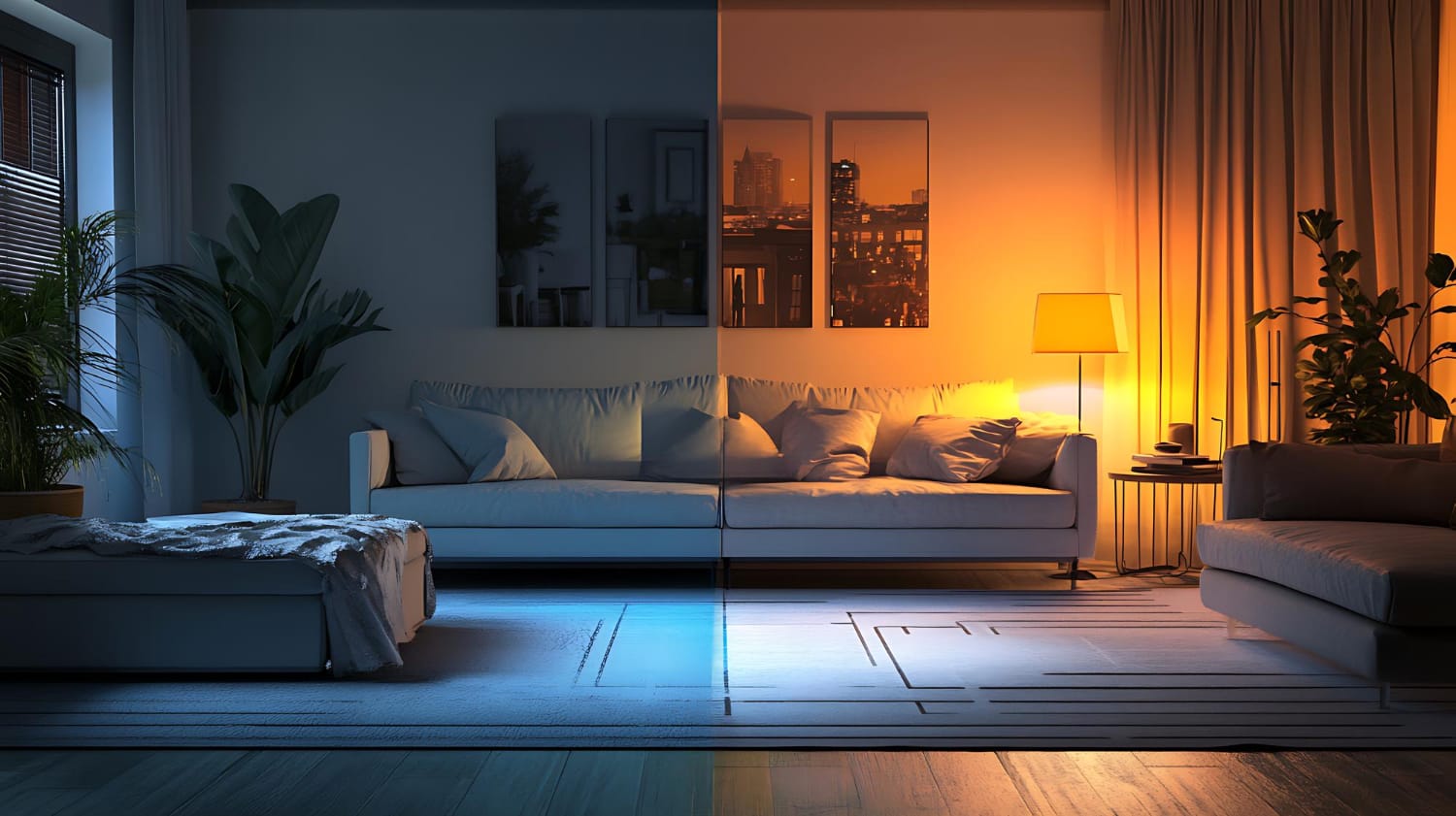
The colour temperature of lighting is a determining element in the creation of pleasant and functional environments. Measured in Kelvin (K), it varies between warm yellow (about 2000K) and cool white (about 6500K) — and each band produces a distinct effect on the perception of space.
When defining the lighting points of a project, choosing the right color temperature for each environment is as important as choosing furniture or coatings.
| Environment | Recommended temperature | Effect |
| Living rooms and bedrooms | 2700K – 3000K | Warmth and relaxation |
| Offices and industrial kitchens | 4000K – 5000K | Clarity and focus |
| Fashion stores | 5000K – 6500K | Highlighting colors and textures |
| Restaurants | 2700K – 3000K | Welcoming atmosphere |
In addition to the color temperature, the intensity of the lighting should also be considered: a strong, bright light can be unpleasant in a resting environment, while a dim light can be insufficient in a workspace.
The definition of the lighting points and the appropriate color temperature for each room is part of the technical project developed in any remodeling or turnkey project — a decision that, taken early, avoids rework and guarantees a coherent result throughout the house.
Frequently Asked Questions
What is the best color temperature for a living room?
Between 2700K and 3000K, for creating a cozier and more relaxing atmosphere, ideal for living spaces.
What does Kelvin mean in lighting?
Kelvin is the unit of measurement of the color temperature of light. The lower the value, the warmer (yellowish) the light; the larger, the colder (white) the light.
Can I mix different color temperatures in the same house?
Yes, as long as there is a functional criterion — for example, warmer light in bedrooms and living room, and cooler in the kitchen or office.