


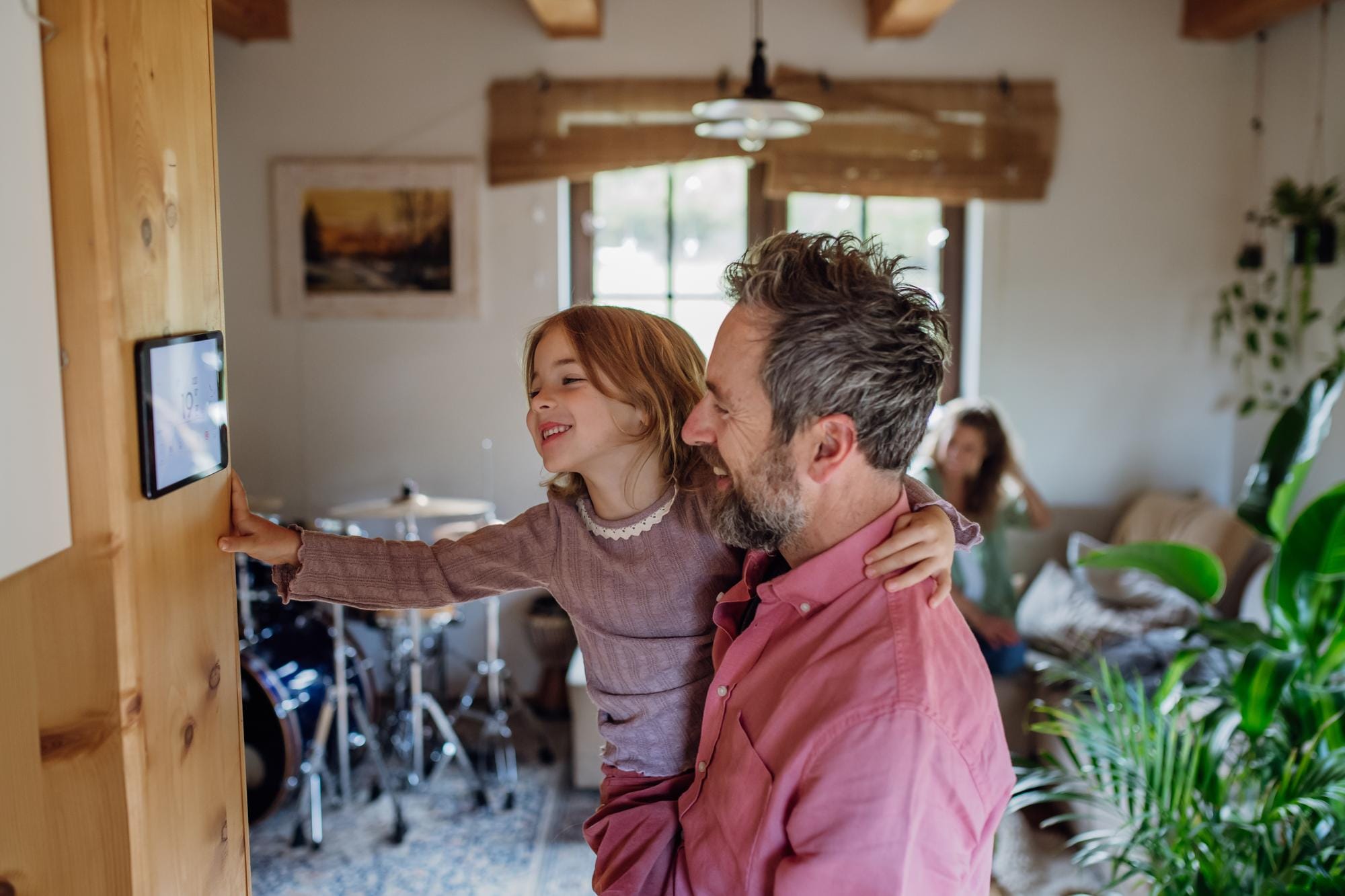
Technology is everywhere. But the best technology is the one you don’t see. In 2026, a smart home isn’t one that’s full of visible gadgets. It’s one that works quietly, improving your life without requiring attention.
This article explores how to implement home automation in Portugal without compromising on design.
What Is a Smart Home in 2026
Definition
A smart home is one where systems (air conditioning, lighting, security, sound) communicate with each other and automatically adapt to your needs.
Benefits
- Comfort: Temperature, light and sound automatically adjusted.
- Efficiency: Significant energy savings.
- Security: Remote monitoring and control.
- Convenience: Control via smartphone or voice.
Smart HVAC Systems
The Challenge in Portugal
Portugal has a temperate climate, but with variations. Humid winters, hot summers. A smart home adapts to these variations.
Technology
- Temperature Sensors: In each room, not just a central one.
- Learning: The system learns your preferences and adapts.
- Efficiency: Heats/cools only occupied spaces.
- Integration: Works with heat pumps, radiators, underfloor heating, air conditioning.
Result: Maximum comfort with minimum consumption. Expected savings of 20-30% in air conditioning energy.
Automated and Circadian Lighting
The Concept
Light affects your circadian rhythm (sleep-wake cycle). Smart lighting simulates natural light: brighter in the morning, warmer and softer at night.
Implementation
- Light Sensors: Detect natural light and adjust artificial.
- Zone Control: Different environments and different times have different needs.
- Pre-programmed scenes: “Wake up”, “Work”, “Relax”, “Sleep”.
- Custom Scenes: Create specific combinations for each moment — such as lighting only the paintings to highlight the décor, without lighting up the rest of the room.
- Manual Control: You can always adjust manually.
Benefit: Better sleep, more energy during the day, energy saving.
Discreet and Effective Security
The Paradox
You want security, but you don’t want cameras visible everywhere.
Solution
- Discreet Cameras: Small, integrated into the design.
- Motion Sensors: Detect presence without cameras.
- Smart Locks: Keyless access control.
- Remote Monitoring: See what’s happening at home from anywhere.
- Smart Alerts: Notifications only for relevant events, such as flood control.
Integrated Surround Sound
The Challenge
Quality sound with no speakers visible throughout.
Solution
- Built-in Columns: Integrated into the walls or ceiling.
- Discrete Microphones: For voice control.
- Thought Acoustics: Sound treatment for quality.
- Multiple Zones: Different sound in each room.
Centralized Control via Smartphone
The Interface
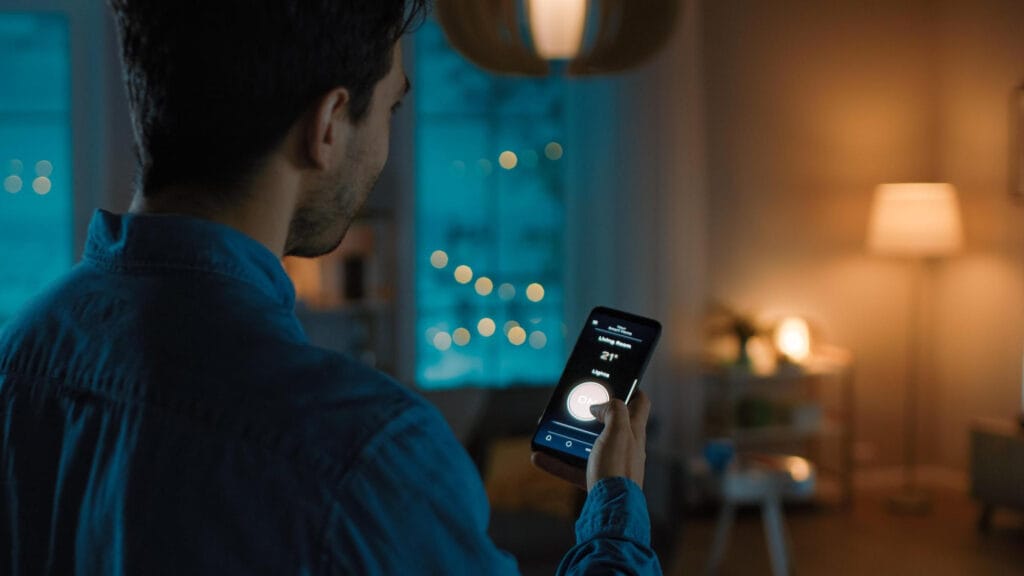
A single app controls everything: climate control, lighting, security, sound, appliances.
Features
- Scenes: One tap to “Leave Home” (turns everything off, closes the blinds and activates security).
- Automation: Rules such as “If no one is home, turn off heating”.
- History: See what consumed energy, when.
- Alerts: Notifications of important events.
- Remote Control: Adjust any system from wherever you are — turn on the air conditioning in dehumidifier mode during the holidays, for example, and turn on the air conditioning before you get home, find the environment already comfortable.
Integration with Premium Design
The Challenge
Technology should not compromise aesthetics.
Solutions
- Discrete Control Panels: Integrated into the wall, neutral colors.
- Invisible Columns: Embedded, not visible.
- Hidden Wiring: Inside walls, not visible.
- Timeless Design: Technology that doesn’t get “dated”.
Technical Challenges and Solutions
Challenge 1: Compatibility — Different brands use different protocols. Solution: Choose a standard (e.g., Z-Wave, Zigbee) and stick to it.
Challenge 2: Privacy — Your home data is sensitive. Solution: Use systems with strong encryption, local control (not just cloud).
Challenge 3: Complexity —Too much technology can be confusing. Solution: Simple interface, technical support available.
Challenge 4: Cost — It can be expensive. Solution: Implement in phases, start with the essentials and what requires less intervention on site.
Conclusion: Comfort Without Compromising Aesthetics
A smart home in 2026 isn’t about gadgets. It’s about quality of life. Comfort, efficiency, security, all running quietly behind the scenes.
The best technology is the one you don’t see. That improves your life without demanding attention.
At CW Arquitetura, we don’t stop at the project: we monitor the work and installation of the systems, test everything before delivery and ensure that each automation works exactly as planned, from day one.
CTA: Want to turn your home into a smart home? Contact us for a consultation.